
Lenormand
The classic 36-card oracle - past, present, and future revealed. Embeddable domain-locked widget, mobile-responsive.
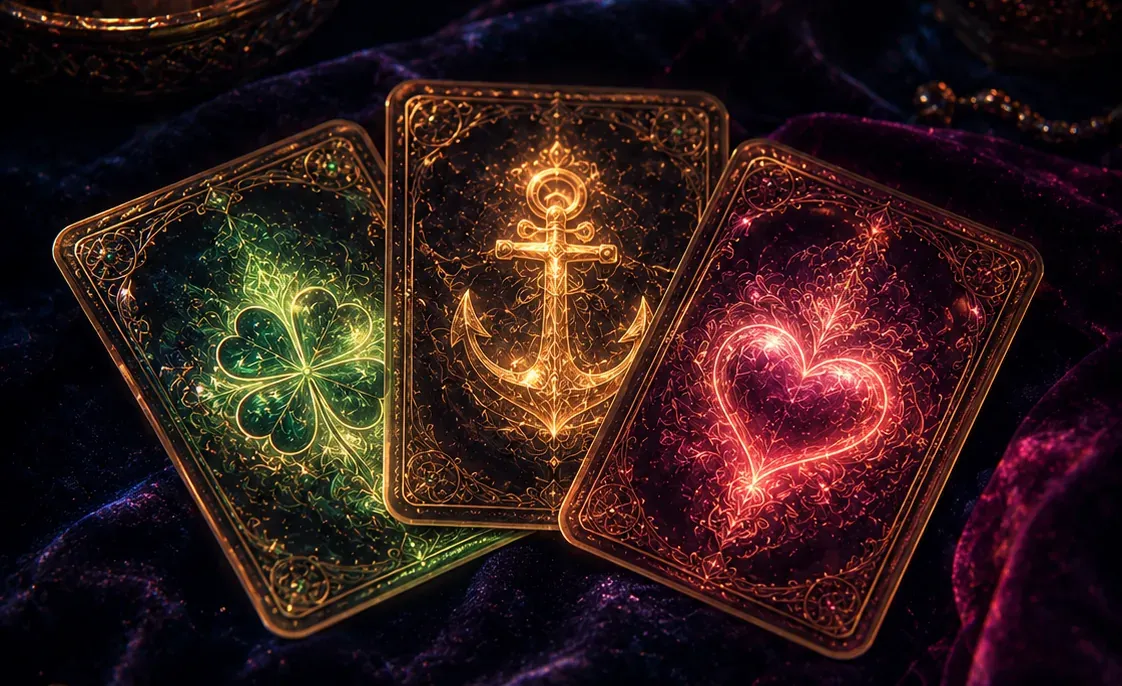
The Lenormand deck is 36 cards, not 78 - and it works completely differently from tarot. Where tarot is psychological and archetypal, Lenormand is direct and situational. A ship means a journey, literally. A dog means a loyal friend. You combine cards in pairs and triplets, and the combinations get surprisingly specific. Readers say Lenormand answers the question you asked; tarot answers the question you should have asked.
How it works
Choose your spread - a simple three-card line for a quick situation read, or a five-card combination for more context. Shuffle and draw. Each card carries a primary keyword, and the reading walks you through how the cards modify each other in sequence. The central card anchors the spread; the surrounding cards act as qualifiers.
Understanding your result
Lenormand combinations are read like sentences. The Clover + Heart + Ring reads as a lucky love commitment. The Clouds + House + Snake reads as confusion or deception in the home. The Fox in a business reading warns of cunning or being misled. The Bear signifies authority or financial strength. The Garden means public life, community, or social media. The Tower means an institution, a boundary, isolation. Each card's meaning shifts slightly depending on its neighbor - that's the core of Lenormand reading.
Frequently asked questions
Do I need to learn Lenormand before using this?
No - each card and combination is interpreted in the reading. But if you come back regularly, you'll start to internalize the card meanings quickly. Lenormand has a smaller vocabulary than tarot, which makes it faster to learn.
How is Lenormand different from tarot?
Lenormand doesn't have Major or Minor Arcana. It has 36 object-and-scene cards that combine like a coded language. Tarot leans symbolic and psychological; Lenormand leans concrete and situational.
Who was Mlle Lenormand?
Marie Anne Lenormand was a French fortune-teller active in Paris from the 1790s onward, reportedly consulted by Josephine Bonaparte and other figures. The deck named after her is actually a later creation, but her name became associated with the tradition.
Can I ask about specific practical questions?
Lenormand handles practical questions very well - work situations, relationship dynamics, timing. It's arguably better suited for concrete questions than tarot is.